
Pincel ou Aerógrafo? O Duelo do Plastimodelismo
Se você está começando no hobby, provavelmente já se fez essa pergunta: "Preciso mesmo de um aerógrafo ou o velho e bom pincel dá conta?". No Milk Plastimodelismo, a gente acredita que a melhor ferramenta é aquela que você domina, mas entender a diferença entre elas é o que separa uma montagem "ok" de um modelo digno de exposição.
Vamos colocar as cartas na mesa!
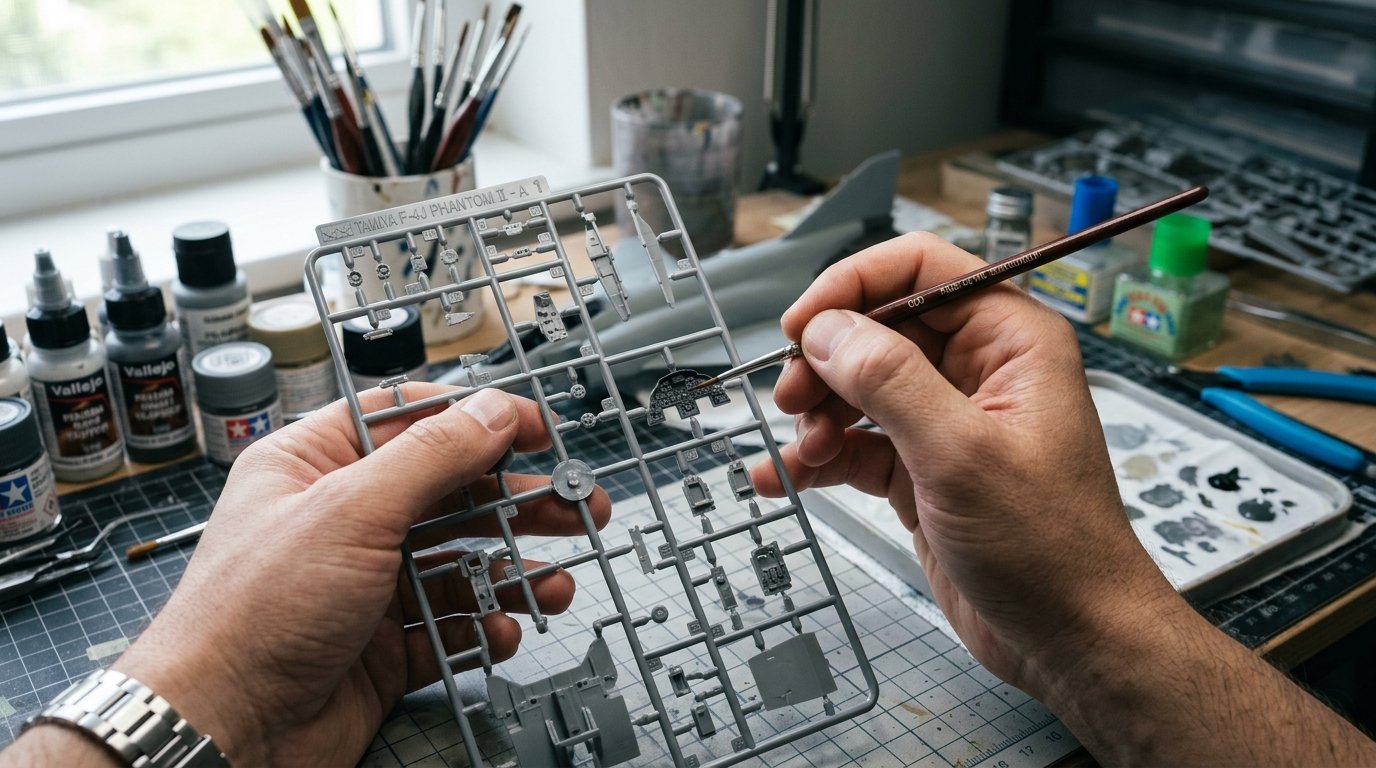
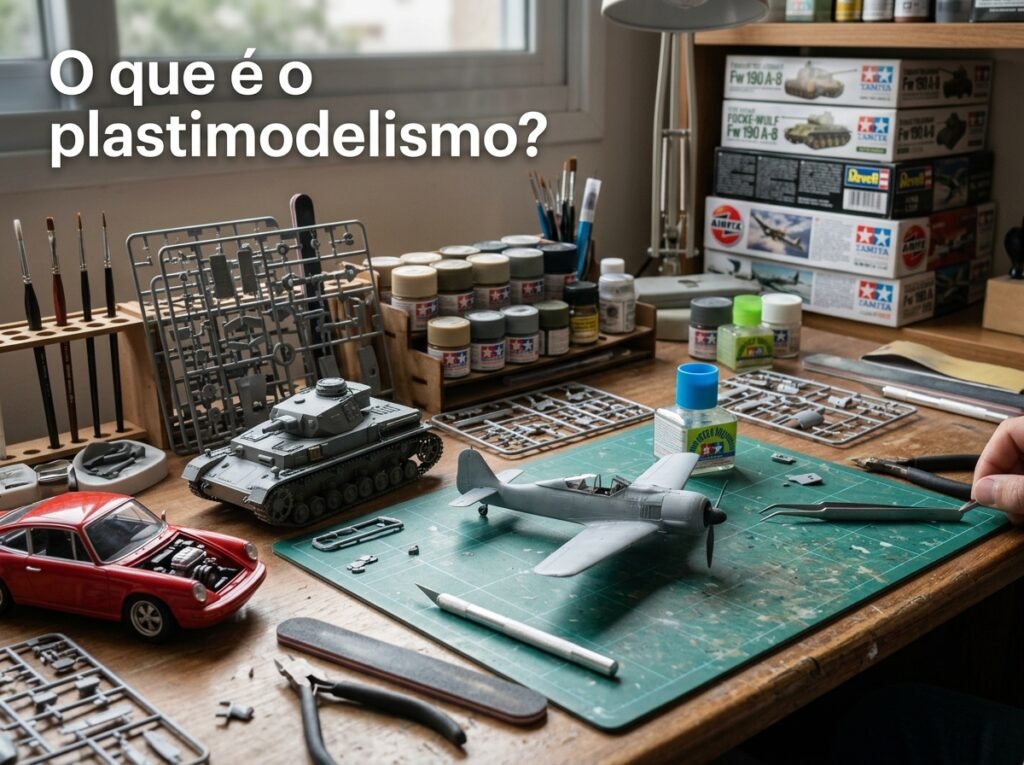
O Pincel: Essencial em qualquer Bancada de Plastimodelismo
O Pincel: A Extensão da sua Mão
O pincel é a base de tudo. Mesmo que você tenha o aerógrafo mais caro do mundo, você nunca vai abandonar o pincel.
Quando usar: Para detalhes minúsculos (painéis de instrumentos, botões, cintos de segurança), figuras (pilotos) e para aplicar técnicas de envelhecimento (weathering) localizadas.
Vantagens: Baixo custo, fácil limpeza, controle total em áreas minúsculas e não faz sujeira de névoa de tinta.
O Desafio: Pintar grandes superfícies (como a asa de um avião 1/48) sem deixar marcas de cerdas exige técnica e tintas muito bem diluídas.
As Vantagens do Aerógrafo no Milk Plastimodelismo
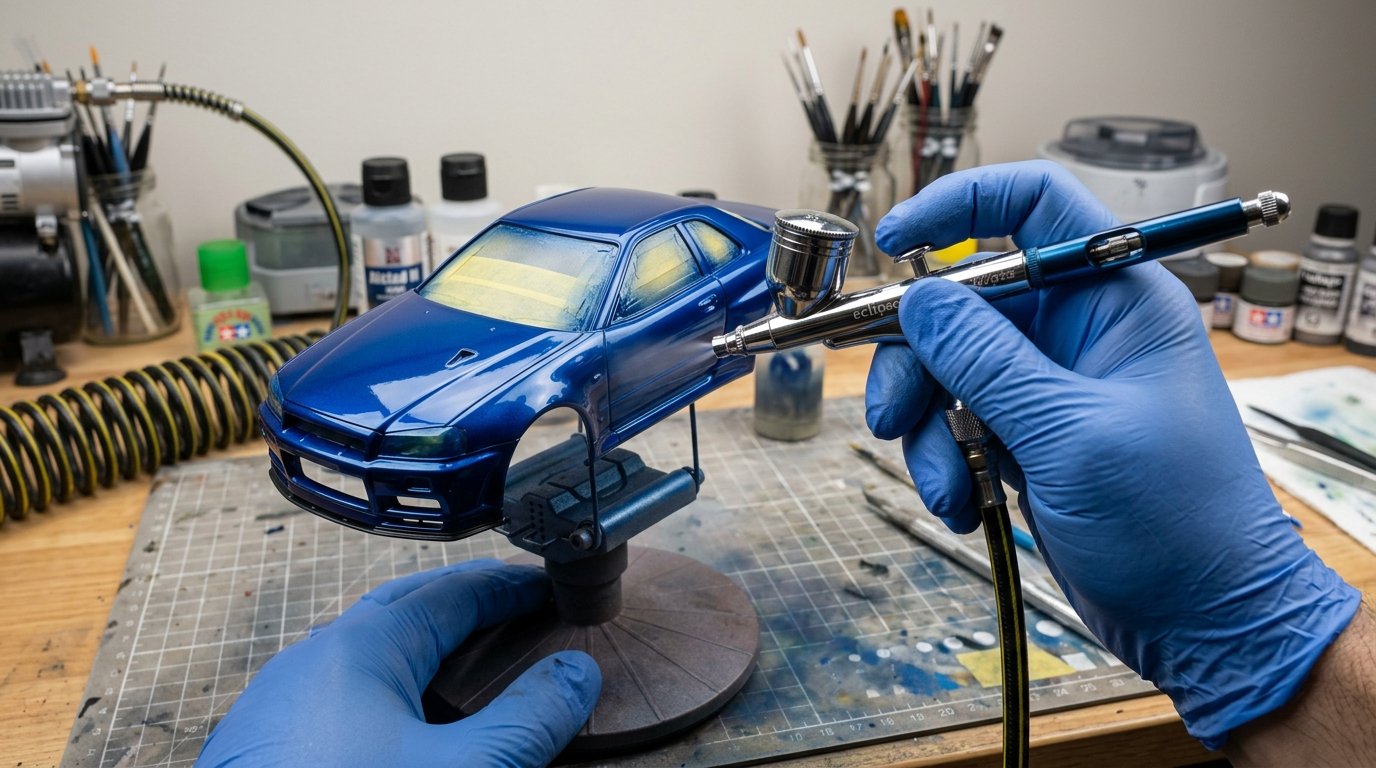
O Aerógrafo: O Toque Profissional
O aerógrafo é o sonho de consumo de dez entre dez modelistas. Ele trabalha atomizando a tinta com ar comprimido.
Quando usar: Pintura de grandes áreas, camuflagens com bordas suaves (fumaça), primers e vernizes. É imbatível para criar gradientes e efeitos de luz e sombra.
Vantagens: Acabamento liso e ultrafino (não esconde os detalhes do plástico), secagem rápida e economia de tinta.
O Desafio: Investimento inicial alto (aerógrafo + compressor), curva de aprendizado para acertar a diluição e limpeza rigorosa após o uso.
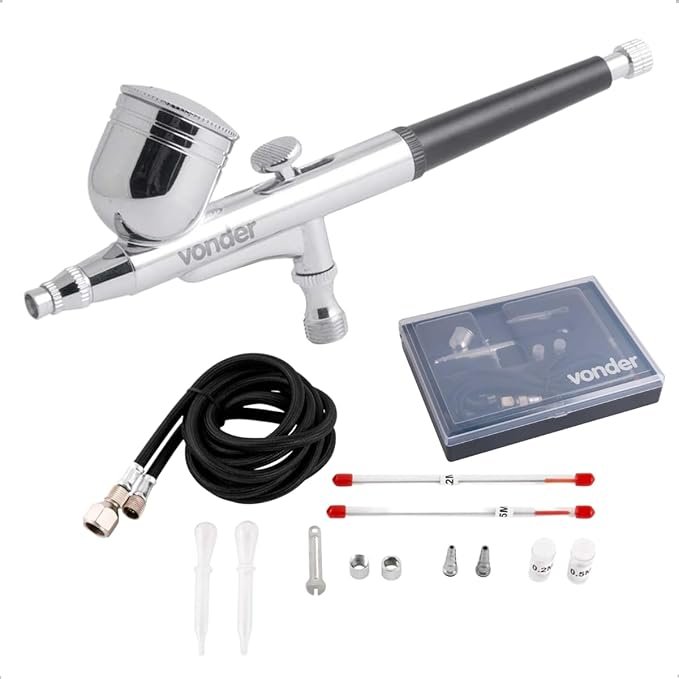
Para quem quer começar, ótimo aerógrafo a um super preço.
Vonder, Aerógrafo Com Acessórios, 13 Peças.
clique na imagem ao lado ou no botão abaixo para comprar o seu.
Pincel ou Aerógrafo: Preciso escolher apenas um?
O Veredito: Devo escolher um?
A resposta curta é: Não!
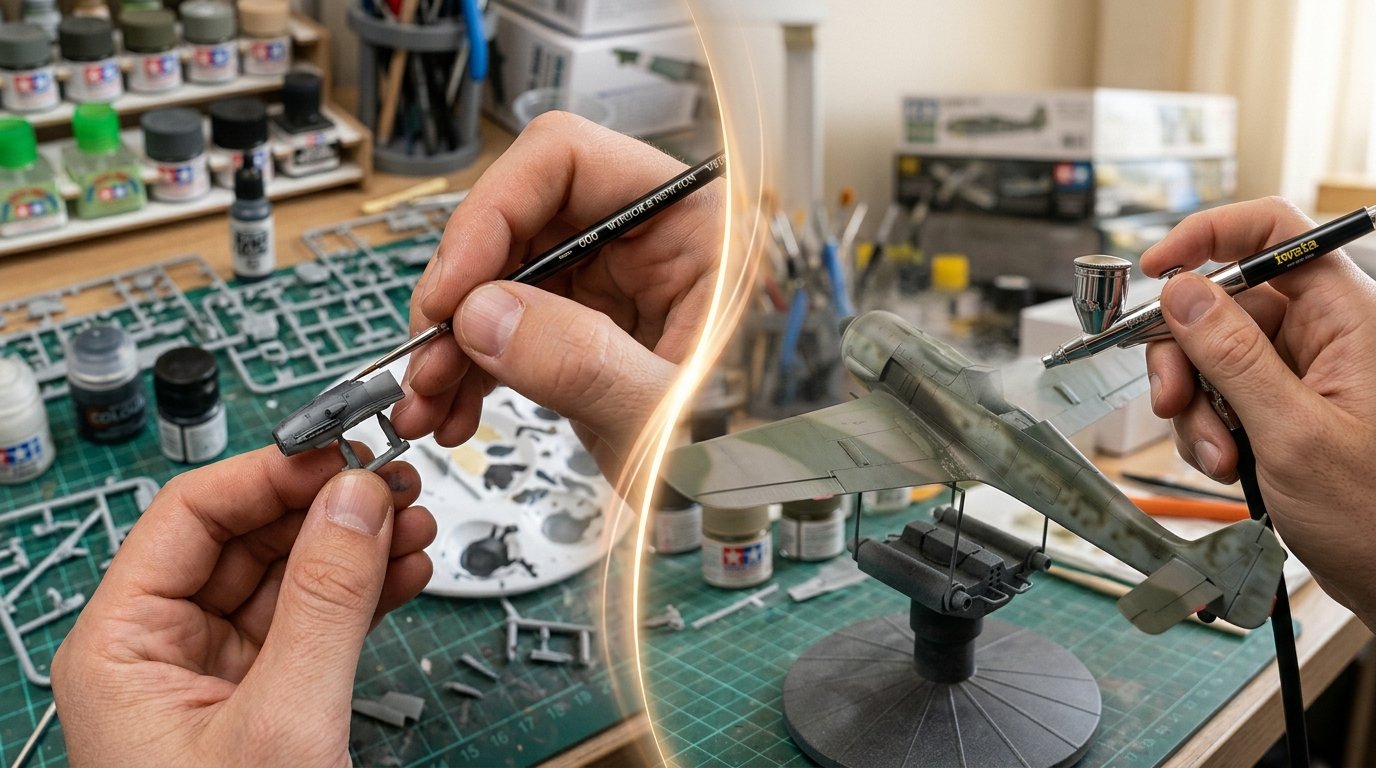
No Milk Plastimodelismo, a gente defende que eles são uma dupla dinâmica. Um plastimodelista completo usa os dois em harmonia:
O Aerógrafo faz o "trabalho pesado": Aplica o primer, a cor base e as camuflagens principais.
O Pincel faz o "trabalho de joalheiro": Pinta os detalhes do motor, os controles do cockpit e dá o toque final nos efeitos de desgaste.
Dicas de Ouro para Modelistas de todos os níveis
Se você está sem orçamento agora, comece investindo em bons pincéis (cerdas macias são fundamentais) e aprenda a diluir a tinta. Quando migrar para o aerógrafo, sua mão já estará treinada para os detalhes!
E na sua bancada?
Você é do time que faz tudo no pincel ou não vive sem o barulho do compressor? Conta aqui nos comentários qual foi a sua maior dificuldade quando começou a usar o aerógrafo!
3 Comments
[…] Neste Post falo sobre Pincel x Aerógrafo. Clique aqui […]
[…] Neste post comparo a pintura com pincel e aerógrafo. Clique aqui […]
[…] Neste post faço uma análise entre o uso de pincel e aerógrafo. clique aqui […]